


| Issue |
Wuhan Univ. J. Nat. Sci.
Volume 30, Number 2, April 2025
|
|
|---|---|---|
| Page(s) | 118 - 124 | |
| DOI | https://doi.org/10.1051/wujns/2025302118 | |
| Published online | 16 May 2025 | |
Mathematics
CLC number: O157.5
The Aα-Spectral Radius and k-Extendability in Graphs
图的Aα-谱半径与k-可扩展性
Institute of Applied Mathematics, Lanzhou Jiaotong University, Lanzhou 730070, Gansu, China
† Corresponding author. E-mail: This email address is being protected from spambots. You need JavaScript enabled to view it.
Received:
19
May
2024
Abstract
A graph is called  -extendable if each
  -matching can be extended to a perfect matching. In this paper, we provide a sufficient condition in terms of the
  -spectral radius for the
  -extendability of a connected graph and characterize the corresponding extremal graphs. In addition, such an
  -spectral condition of a connected balanced bipartite graph is also considered, and the corresponding extremal graphs are determined.
摘要
若一个图的任意 -匹配都可扩展为该图的完美匹配,则称此图为
 -可扩展图。本文给出了连通图具有
 -可扩展性的一个
 -谱条件,并刻画了相应的极图。此外,还考虑了连通平衡二部图具有
 -可扩展性的一个
 -谱条件及其相应的极图。
Key words: Aα-spectral radius / matching / k-extendable graph
关键字 : Aα-谱半径 / 匹配 / k-可扩展图
Cite this article: HA Jing, WEN Fei. The Aα-Spectral Radius and k-Extendability in Graphs[J]. Wuhan Univ J of Nat Sci, 2025, 30(2): 118-124.
Biography: HA Jing, female, Master candidate, research direction: graph theory. E-mail: This email address is being protected from spambots. You need JavaScript enabled to view it.
Foundation item: Supported by the National Natural Science Foundation of China (11961041, 12261055) and the Key Project of Natural Science Foundation of Gansu Province (24JRRA222)
© Wuhan University 2025
 This is an Open Access article distributed under the terms of the Creative Commons Attribution License (https://creativecommons.org/licenses/by/4.0), which permits unrestricted use, distribution, and reproduction in any medium, provided the original work is properly cited.
0 Introduction
All graphs considered are undirected, simple, and connected throughout this paper. Let  be a graph with vertex set
  and edge set
  . We denote by
  and
and  the order and the size of
  , respectively. Moreover, we write
  for the degree of vertex
  in
in  , and
, and  for the neighbor set of vertex
  in
in  . For any
  , let
, let  be the subgraph of
  induced by
  , and let
  be the subgraph induced by
  . The set of all edges between two vertex sets
  and
and  is denoted by
  . For any two graphs
  and
and  , we denote by
  the disjoint union of
  and
and  . The join
  is the graph obtained from
  by adding all possible edges between
  and
and  .
.
The adjacency matrix 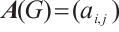 of
of  is a
is a  symmetric matrix, whose entries
  are given by
  if
if  and
and  are adjacent in
  , and
, and  otherwise. The degree diagonal matrix of
  is denoted by
  , where
  is the degree of
  in
in  . For any real
  , Nikiforov[1] defined the
  -matrix of
  as
as 
 . The largest eigenvalue of
  is called the
  -spectral radius of
  , and denoted by
  . Obviously,
 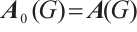 ,
, 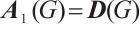 and
and 
 , where
  is the signless Laplacian matrix of
  . Note that
  is a real symmetric non-negative matrix. By the Perron-Frobenius Theorem,
  is a positive number and there exists a unique positive unit eigenvector corresponding to
  , which is called the Perron vector of
  .
.
A graph is  -extendable if each matching consisting of
  edges can be extended to a perfect matching. Clearly, the existence of a perfect matching can be regarded as 0-extendability. The concept of
  -extendability gradually evolved from the concept of elementary (that is, 1-extendable) bipartite graphs. In 1980, Plummer[2] gave the first results on
  -extendable graphs for arbitrary
  , he studied the properties of
  -extendable graphs and proved that nearly all
  -extendable graphs
  are
are  -extendable and
  -connected. Then Plummer[3-4] provided the relationships between the toughness and genus of a graph and the
  -extendability of the graph. Moreover, many researchers further studied the relationship between
  -extendability and other graph parameters, such as minimum degree, connectivity, binding number, and independence number etc[5-10].
In the past few years, much attention has been paid to the connections of the spectral radius and the  -extendable graphs. Fan and Lin[11] investigated the adjacency spectral conditions for a graph (as well as a balanced bipartite graph) with a minimum degree
  to be
to be  -extendable. In Ref. [12], Zhou and Zhang gave a lower bound on the signless Laplacian spectral radius to ensure that
  is
is  -extendable. Then, Zhang and Dam[13] studied the
  -extendability of graphs from a distance spectral perspective. The main goal of this paper is to study the relationship between
  -extendability of graphs and the
  -spectral radius.
In the following, we first provide a condition for the  -extendability of matchings in a graph in terms of the
  -spectral radius.
Theorem 1 Let  be an integer, and let
  be a connected graph of even order
  with
with  . For
. For  , if
, if

then  is
is  -extendable, unless
  .
.
A bipartite graph is called balanced if both parts of the bipartition have equal size. Note that every bipartite graph with a perfect matching must be balanced. Hence a  -extendable bipartite graph must be balanced. Furthermore, we denote by
  the bipartite graph obtained from
  by attaching a vertex to
  vertices in
  -vertex part (see Fig. 1). In Ref. [13], Zhang and Dam gave a sufficient condition in terms of the distance spectral radius for the
  -extendability of a bipartite graph. Along this line, we have the result below.
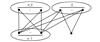 |
Fig. 1 The extremal graph 
|
Theorem 2 Let  be an integer, and let
  be a connected balanced bipartite graph of order
  with
with  . For
. For  , if
, if

then  is
is  -extendable, unless
 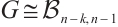 , see Fig. 1 for instance.
1 Preliminaries
In this section, we give several preliminary lemmas, which are useful to the proof of our main results.
For any  , let
, let  denote the number of odd components in
  . In 1995, Chen[7] provided a necessary and sufficient condition for the existence of
  -extendable graphs.
Lemma 1[7] Let  . A graph
  is
is  -extendable if and only if

for any  such that
  contains
  independent edges.
Lemma 2[1] If  is connected, and
  is a proper subgraph of
  , then
 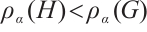 for any
  .
.
Given any  , let
, let  be the set of all neighbors of the vertices in
  . In Ref. [14], Plummer gave the necessary and sufficient conditions for bipartite graphs to be
  -extendable.
Lemma 3[14] Let  and let
  be a connected bipartite graph with parts
  and
and  . Then the following are equivalent:
(i)  is
is  -extendable;
(ii)  and for all nonempty subsets
  of
of  , if
, if  , then
  ;
;
(iii) For all  and
and  , the graph
  has a perfect matching.
Finally, we need a known result mentioned as Claim 1 of the proof of Theorem 1.1 in Ref. [15].
Lemma 4[15] Let  be positive integers and
 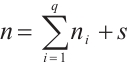 . For
. For  ,we have
  , where the equality holds if and only if
  .
.
2 Proof of Theorem 1
In this section, we elaborate on the proof of Theorem 1, which provides a sufficient condition via the  -spectral radius of a connected graph to ensure that the graph is
  -extendable.
Proof of Theorem 1 Suppose to the contrary that  is not
  -extendable, we will prove that if
  is not
  -extendable, then
  with equality only if
 . By Lemma 1, there exists some nonempty subset
  , such that
  and
and  . For convenience, let
 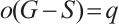 and
and  . We assert that
  and
and  have the same parity. If
  is odd, then
  is an odd number since
  is even, and so, the number of odd components in
  is odd, i.e.,
  is odd. Hence,
  and
and  are odd. Similarly, we obtain that
  is even if
  is even. Thus, it concludes that
  . To promote the proof, we have the following three claims.
Claim 1 For some odd integers  and
and 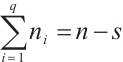 ,
,  is a spanning subgraph of
  .
.
Proof Let 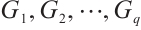 be the orders of the
  odd components of
  with
with 
 , and let
 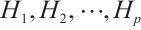 be the
  even components of
  . Without loss of generality, we assume that all even components join to component
  , i.e.,
 . So,
. So,  is the spanning subgraph of
  for some integer
 , and
, and  is an odd integer. Let
  be the spanning subgraph of
  for some
  and
and 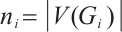 . Then all components of
  are odd and
  is the spanning subgraph of
  , and thus,
  is a spanning subgraph of
  for some odd integers
  and
and 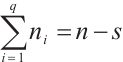 .
.
Furthermore, by Lemma 2 we have  with equality holds if and only if
  .
.
If  , then
  , say
, say  .
.
Hence, by Lemma 4 we have that  , where the equality holds if and only if
  .
.
Note that  . Let
. Let  . We next compare the
  -spectral radius of
  and
and  in the following.
Claim 2 For  , we have
  with equality holds if and only if
  .
.
Proof If  , we have
 . Hence,

Now we consider  . Clearly,
  since
since  and
and  has the same parity, here it is sufficient to prove
  for
for  . We notice that
 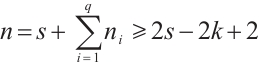 ,
,  and
and 
 .
.
Suppose that  is the unit Perron eigenvector of
  , and
, and  denotes the entry of
  corresponding to the vertex
 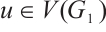 . From the equitable partition
 , we have that
  ,
,  and
and 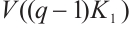 has the same entries in
  . Let
. Let  for
for 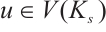 ,
,  for
for  and
and  for
for  , respectively. For convenience, we write
  as follows:

For the graph  , we partition
  as
as 
 . Thus,
  has the form of a block matrix below:

where  ,
, ,
, and
and  , meanwhile,
  is an all-ones matrix and
  is an identity matrix.
Furthermore, by Rayleigh's principle, we have
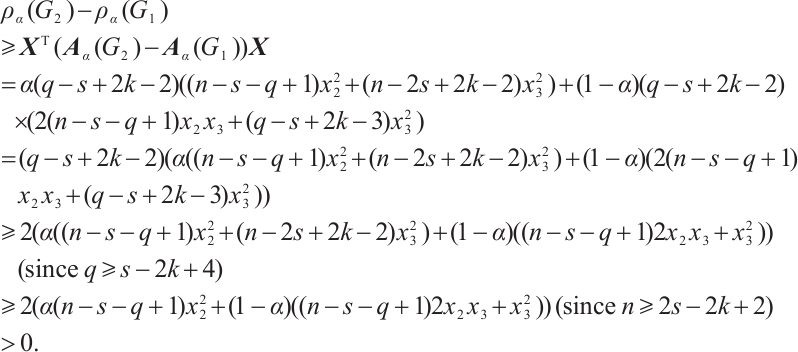
Therefore,  .
.
Recall that  . Let
. Let  . Next, we compare the
  -spectral radius of
  and
and  and give the following claim.
Claim 3 Let  and
and  . For
. For  , we have
with equality holds if and only if  .
.
Proof If  , we have
  . Hence,
  .
.
If  , we should verify that
 . Since
  we have
 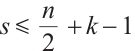 . Thus, it concludes that
 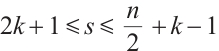 . Note that
  and
and  .
.
Let  be the unit Perron eigenvector of
  , and
, and  be the entry of
  corresponding to the vertex
 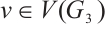 . Since
 is an equitable partition of
  ,
,  takes the same value on the vertices of
  (respectively
 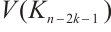 and
and  ). Let
  for
for 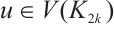 ,
,  for
for 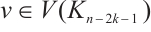 and
and  for
for 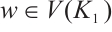 , then
  can be written below:

Let  . Then
  can be partitioned as
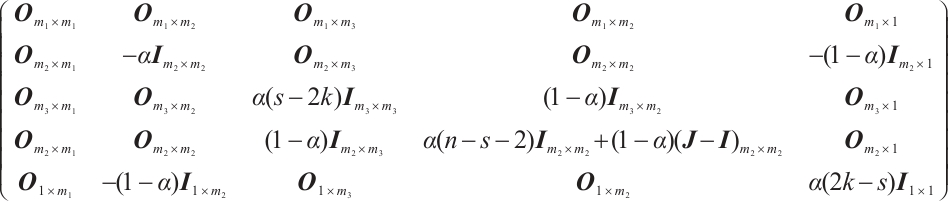
where  ,
, 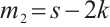 and
and  .
.
Thus, by  , we can get that
 (1)
(1)
 (2)
(2)
Hence, it follows from Eqs. (1) and (2) that

which implies  .
.
According to the Rayleigh quotient, we derive that
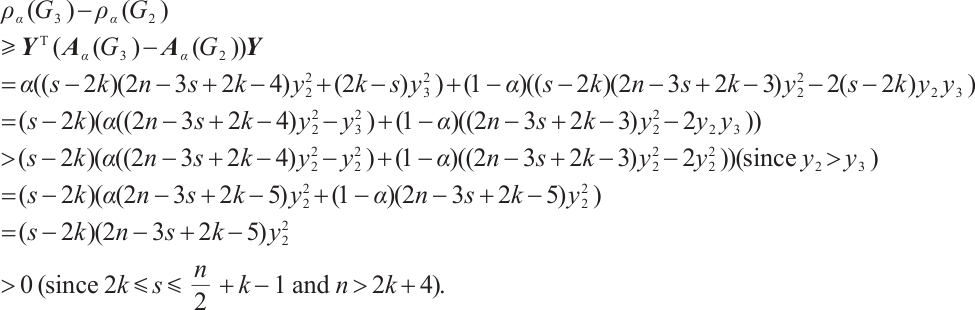
Thus,  .
.
Moreover, we prove that  is not
  -extendable. Set
 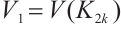 ,
, 
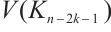 and
and 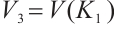 , we take a nonempty subset
  , then
  . Hence, Lemma 1 deduces that
  is not
  -extendable. Therefore, the proof is completed.
3 Proof of Theorem 2
In this section, we will present a comprehensive proof of Theorem 2.
Proof of Theorem 2 Suppose, by a contradiction, that  is not
  -extendable. We will prove that if
  is connected balanced bipartite but not
  -extendable, then
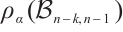 with equality holds if and only if
 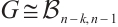 .
.
Let  be a connected balanced bipartite graph, where
  . Since
  is not
  -extendable, by Lemma 3, there exists some nonempty subset
  such that
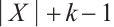 and
and 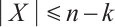 . Let
. Let  be the connected balanced bipartite graph be obtained from
  by joining
  and
and  as well as joining
  and
and 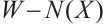 , and by adding all possible edges between
  and
and  , i.e.,
 .
.
For convenience, we may set  . It is clear then that
  is a spanning subgraph of
  , and
, and

By Lemma 2, we can deduce that

with equality holds if and only if 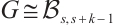 .
.
If  or
or  , then
  , which is the claimed extremal graph. By the symmetry of
  , we need to prove
  for
for  .
.
Let  be the unit Perron eigenvector of
 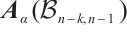 , and
, and  denotes the entry of
  corresponding to the vertex
 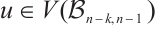 . It is easy to see that
 is an equitable partition of
  , and so, all vertices of
 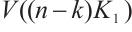 (respectively
  ,
,  and
and  ) have the same entries in
  . Then we may set
  for
for  ,
,  for
for  ,
,  for
for  and
and  for
for 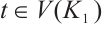 , respectively. So, we write

Let  . Then one can partition
  as follows:
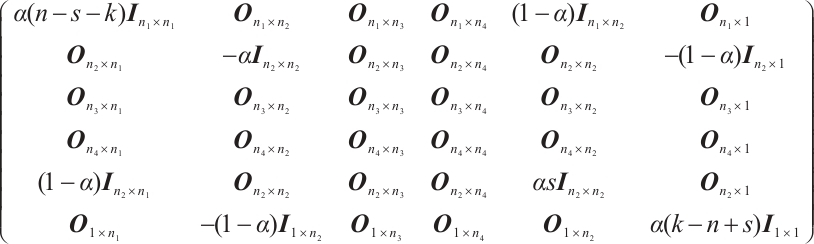
where  ,
, 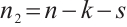 ,
,  and
and 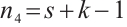 .
.
Thus, by  , we can get
 (3)
(3)
 (4)
(4)
 (5)
(5)
Now, from Eq. (3) we have
 (6)
(6)
Moreover, by Eqs. (4) and (5) we deduce that
 (7)
(7)
Consequently, combining with Eqs. (6) and (7) we have

which implies that  .
.
Moreover, by Rayleigh's principle, we can get
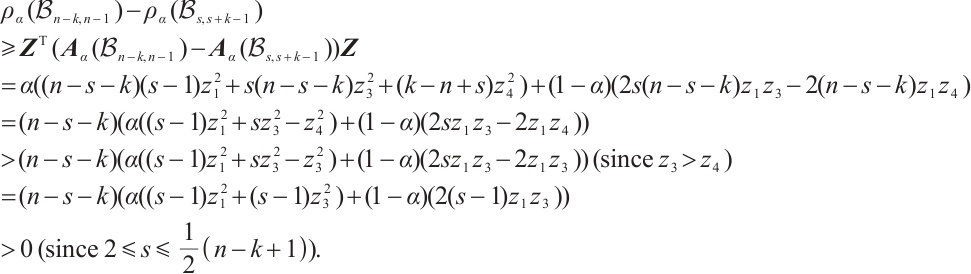
Hence, it deduces that  . Note that the graph
  is not
  -extendable. Therefore, this completes the proof of Theorem 2.
References
- Nikiforov V. Merging the A- and Q-spectral theories[J]. Applicable Analysis and Discrete Mathematics, 2017, 11(1): 81-107. [Google Scholar]
- Plummer M D. On n-extendable graphs[J]. Discrete Mathematics, 1980, 31(2): 201-210. [Google Scholar]
- Plummer M D. Toughness and matching extension in graphs[J]. Discrete Mathematics, 1988, 72(1): 311-320. [Google Scholar]
- Plummer M D. Matching extension and the genus of a graph[J]. Journal of Combinatorial Theory, Series B, 1988, 44(3): 329-337. [Google Scholar]
- Ananchuen N, Caccetta L. Matching extension and minimum degree[J]. Discrete Mathematics, 1997, 170(1/2/3): 1-13. [Google Scholar]
- Lou D J, Yu Q L. Connectivity of k-extendable graphs with large k[J]. Discrete Applied Mathematics, 2004, 136(1): 55-61. [Google Scholar]
- Chen C P. Binding number and toughness for matching extension[J]. Discrete Mathematics, 1995, 146(1/2/3): 303-306. [Google Scholar]
- Robertshaw A M, Woodall D R. Binding number conditions for matching extension[J]. Discrete Mathematics, 2002, 248(1/2/3): 169-179. [Google Scholar]
- Maschlanka P, Volkmann L. Independence number in n-extendable graphs[J]. Discrete Mathematics, 1996, 154(1/2/3): 167-178. [Google Scholar]
- Ananchuen N, Caccetta L. A note of k-extendable graphs and independence number[J]. Australasian Journal of Combinatorics, 1995, 12: 59-65. [Google Scholar]
- Fan D D, Lin H Q. Spectral conditions for k-extendability and k-factors of bipartite graphs[EB/OL]. [2024-03-08]. https://doi.org/10.48550/arXiv.2211.09304. [Google Scholar]
- Zhou S Z, Zhang Y L. Signless Laplacian spectral radius for a k-extendable graph[EB/OL]. [2024-03-08]. https://doi.org/10.48550/arXiv.2303.16687. [Google Scholar]
- Zhang Y K, van Dam E R. Matching extension and distance spectral radius[J]. Linear Algebra and Its Applications, 2023, 674: 244-255. [Google Scholar]
- Plummer M D. Matching extension in bipartite graphs[J]. Congressus Numerantium, 1986, 54 : 245-258. [Google Scholar]
- Zhao Y H, Huang X Y, Wang Z W. The A-spectral radius and perfect matchings of graphs[J]. Linear Algebra and Its Applications, 2021, 631: 143-155. [Google Scholar]
All Figures
|
Fig. 1 The extremal graph
|
| In the text | |
Current usage metrics show cumulative count of Article Views (full-text article views including HTML views, PDF and ePub downloads, according to the available data) and Abstracts Views on Vision4Press platform.
Data correspond to usage on the plateform after 2015. The current usage metrics is available 48-96 hours after online publication and is updated daily on week days.
Initial download of the metrics may take a while.