


| Issue |
Wuhan Univ. J. Nat. Sci.
Volume 31, Number 1, February 2026
|
|
|---|---|---|
| Page(s) | 58 - 68 | |
| DOI | https://doi.org/10.1051/wujns/2026311058 | |
| Published online | 06 March 2026 | |
Computer Applications and Software
CLC number: TJ391.9
Design of "1+N+N" Parachute Training Simulation System
一种支持“1+N+N”模式的伞降训练模拟系统设计方法
Teaching and Research Department of Unit 91976, PLA, Guangzhou 510430, Guangdong, China
(中国人民解放军91976部队,广东 广州 510430)
Received:
5
January
2025
Abstract
Aiming at the issues of poor scalability, single training modes, and missing platform foundation in current parachute training simulation systems, a method for a parachute training simulation system supporting the "1+N+N" mode is proposed by building a flexible functional structure design based on four domains and two systems architecture, which can adapt to multiple working modes such as "1+N" and "1+N(*)". This method can effectively save the cost and time of upgrading and expanding system capacity, greatly increasing the lifespan and availability of the system.
摘要
针对当前伞降训练模拟系统存在扩展性差、训练模式单一和平台底座功能缺失的问题,提出一种支持“1+N+N”模式的伞降训练模拟系统设计方法,构建了四层域、两重体系支撑的柔性化功能结构。所构建的系统支持“1+N”和“1+N(*)”多种工作模式,能够自动发现、主动适配动态接入硬件模拟器和辅助设备。该方法能够有效节约升级扩充系统容量的成本和时间,极大地增加系统的寿命及可用性。
Key words: industrial design / virtual reality / software architecture / visualization / computer simulation model
关键字 : 工业设计 / 虚拟现实 / 体系结构 / 可视化 / 计算机仿真模型
Cite this article:LI Xianjin, LIU Yu, LI Gangqiang, et al. Design of "1+N+N" Parachute Training Simulation System[J]. Wuhan Univ J of Nat Sci, 2026, 31(1): 58-68.
Biography: LI Xianjin, male, Ph. D., Engineer, research direction: military modeling and simulation, operational training system. E-mail: This email address is being protected from spambots. You need JavaScript enabled to view it.
© Wuhan University 2026
 This is an Open Access article distributed under the terms of the Creative Commons Attribution License (https://creativecommons.org/licenses/by/4.0), which permits unrestricted use, distribution, and reproduction in any medium, provided the original work is properly cited.
0 Introduction
Complex organization and coordination, difficult guarantee, high safety risk, weather restrictions and so on will lead to poor effect of real parachute jump training[1-2]. The use of parachute training simulation system can not only effectively reduce the safety risk, but also improve the training quality and efficiency, and has significant military and economical benefits. The existing parachute training simulation system can realistically simulate the visual, auditory, somatosensory and other feelings in the process of parachuting, and can record data to assist in assessment. However, through market research, technical comparison and user feedback, it is found that there are some problems in the existed system.
1) Lack of real weightlessness experience
The existing training equipment uses VR glasses, which makes use of human visual difference to produce three-dimensional sense of space, but the trainee’s body is generally in a state of rest or slow decline, and cannot experience the sense of physiological weightlessness[3].
2) Power limitation of lifting device
The existing parachute training simulators mainly use hydraulic and motor power sources to control the lifting platform. But the application practice shows that the two power sources have obvious shortcomings. The response of the training device of the hydraulic structure is slow, the lifting speed of the platform is slow, and the liquid will cause harm to the surrounding environment. Although the motor control mode can accurately and quickly control the rise and fall of the platform, it has the disadvantages of high cost, high power consumption and complex maintenance[4].
3) The strap unit and control components are different from real parachutes
The design of the real parachute strap unit is scientific and ingenious, inline with the ergonomic principle. In addition to fixing the user, it also has precise control components for the user to adjust the falling speed and orientation after leaving the aircraft. The existing parachute training simulator generally uses the simulated strap unit, which is equivalent to the actual equipment in some extent, but the material, joint and control end are obviously different[5-6]. Using this kind of simulator training, the trainees' skills not only cannot be applied to the actual parachuting, but may mislead or even interfere with the development of parachuting skills.
4) The height measurement of lifting platform is not accurate
The existing parachute training simulation system generally uses a single sensor to measure the height of the platform. The commonly used ones are motor encoder and infrared ranging device. The former uses the angle information of the motor encoder to measure the height of the lifting platform, but due to the existence of tensile strain in the process of rope transmission, it will lead to errors in the measure values, which may lead to be out of control in the operation of the platform control system and even accidents. The latter is easily disturbed by obstacles in the process of measurement, resulting in data deviation.
These problems can be solved by the latest technologies such as virtual reality, motion capture and large space position. In this paper, these technologies are used to establish simulation models of personnel, aerial kinematics, three-dimensional viewpoint, parachute, collision detection and so on. Hardware-in-the-loop(HIL) simulation devices such as cabin, individual soldier strap system, off-plane platform, personnel movement in air, and water landing environment, backup parachute and other related devices are developed to construct a realistic parachute training environment. The new parachute simulation training not only enables the trainees to train in person, but also supports a variety of parachute types, aircraft models, meteorological conditions, landing areas and training groups, it can also quantitatively evaluate the psychological quality of trainees based on wearable heart-rate detection device.
1 Requirement Analysis
In general, the parachute training simulation system is based on the following requirements.
The first is to adapt to the development of information technology. The increasingly mature and reliable virtual reality, motion capture and spatial positioning technology are introduced to reconstruct the function of the parachute training simulation system and improve the training efficiency.
Secondly, it should keep up with the training needs of troops to improve the quality and efficiency of parachute training. Although parachuting training on land can achieve certain results, but when it comes to the real jump from the plane, it is often inconsistent with the actual jump because it is unable to complete the continuous movement training on land. Psychological factors and other reasons can also lead to motion deformation and even operation errors, a little carelessness may cause serious consequences. In addition, multi-person formation operation training in air is not supported by simulation training equipment on land.
Thirdly, it should solve the difficult problems of training evaluation. The system can monitor the training activities of the trainees in all direction, especially in the aspect of psychological quality, and can find the problems and deficiencies in the training time, so as to provide a basis for correcting actions and evaluating training.
1.1 System Function
The main functions of the system include: 1) leaving preparation, leaving, parachute controling and landing skill simulation training; 2) emergency handling simulation training; 3) weightlessness simulation training; 4) with heart-rate monitoring equipment, supporting the accurate implementation of trainee psychological quality evaluation. 5) multi-person group simulation training.
1.2 Overall Technical Index
1) Support syllabus subject training. It can realize the seamless connection between theory teaching and real parachute diving, improve the training effect and efficiency, and improve the training level.
2) Training simulation of special situation management. Special situation can be added to the trainees at different times and in different ways to train their rapid response.
3) The function of examination and evaluation. The actions of the trainees such as leave, manipulation, handling of special situation and landing can be captured and identified by intelligent equipment, and can be evaluated automatically combined with the data.
4) Virtual reality function. It can provide a training environment with full-view, three-dimensional (3D), virtual and real combination.
2 Architecture Design
2.1 System Architecture
Adhering to the design concept of "comprehensive coverage, key breakthrough, scientific unity and efficient application", a kind of system architecture is constructed, which separates data from model and supports stand-alone training and group training at the same time. The architecture is divided into comprehensive integration layer, service supply layer, network interconnection layer, foundation support layer and safe guarantee system (see Fig.1). The bottom layer provides service support for the upper layer, and the upper layer aggregates the basic functions of the lower layer. The architecture can realize such functions as plan management, perception and reappear, assessment and evaluation, virtual scene generation, hardware-in-the-loop simulation, training management, network management and system management. Under the condition of ensuring the safety of trainees, help trainees or groups to effectively grasp the parachute jump requirements from leaving to landing, and improve the handling ability for dangers in air, significantly enhance the effect of parachuting simulation training.
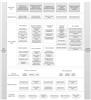 |
Fig. 1 System architecture |
Foundation support layer includes computation
resources, network devices, sound-video devices and wearable devices. This layer provides data platform and technical support for upper layer interaction by building unified underlying virtual reality system development architecture, bundling VR resources, introducing wearable devices, which is the basis of the whole system.
Focusing on the interconnection among different kinds of simulation training equipments in the future, the model data layer constructs a set of parachute professional training model database with unified structure and outstanding characteristics. This layer provides all the model resources and data resources needed by the parachute training simulation system. The model resources include personnel model, training scene model, battlefield environment model, training grouping model and so on. The data resources include 2D/3D map of the landing site, meteorological environment data, parachute performance data, aircraft performance data, training subjects and so on.
The network interconnection layer provides a set of standard coding protocol modules, which can realize the wired/wireless connection and communication of the system itself including all related devices/components.
According to the design thoery of software engineering, based on the principles of cohesion, reconfiguration and function minimization, the software application functions are decomposed into services to form a service supply layer. This layer includes eight service packages: plan management, perception and reproduction, assessment and evaluation, virtual scene generation, hardware-in-the-loop simulation, training management, network management, as well as system management. It can support the integrated layer to extract and couple services according to the training business requirements, and form a business system collection that meets the whole process and subjects requirements of group parachute training.
The integrated layer is a set of software collection, including parachute training application software, real-time heart-rate monitoring software, flight scene control software, server control software and client training software. The first four softwares are deployed on the server side, installed in the integrated guidance console. The last software is embedded in the high-performance computer inside the parachute simulator, and drives the hardware of the parachute simulator into the training process.
The parachute training simulation system can be applied to parachuting skill simulation training, parachuting disposal simulation training for dangers and accidents, weightlessness simulation training, psychological quality evaluation and multi-person group parachuting simulation training.
Applicatian area pass through all levels of the whole system design, follow the training law, training time requirements and simulation training equipment standards, and set the system operation process standards, which can ensure the safe, reliable, stable and efficient operation of the system.
2.2 Functional Composition
The parachute training simulation system is composed of integrated control console, parachute training simulator and monitoring device (see Fig.2), which supports two deployment modes: single skill training and multi-person group training.
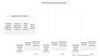 |
Fig. 2 System composition |
The integrated director console includes integrated multi-person control desktop, high-performance computer, display, voice equipment, projection system, communication module, spare parts, etc., and is equipped with parachute training application, real-time heart-rate monitoring, flight scene simulation and server control software. It can be operated by one person or cooperated by many people.
The parachute simulator is the key equipment for simulation training. It adopts truss structure and is composed of strap system modified by real parachute strap system, sports platform, VR components, acousto-optic components and training client software. It can support parachuting skill training simulation and emergency response simulation training. The training client software is embedded in the built-in the computer inside the parachute simulator. Support single person simulation training.
The heart-rate monitoring device adopts wrist wearing mode and is connected wirelessly with the real-time heart-rate monitoring software. It can collect the trainee's heart-rate in real time and display it synchronously on the computer of the integrated director console. Because of its operational flexibility, this device can also be used independently.
The parachute training application software is the core program to organize and carry out parachute training simulation, which is deployed in the integrated director console and operated by the system support staff. It can be used for pre-training scheme design such as scene setting, flight route setting, release point setting, subject setting and emergency setting, as well as process control during training, for example start, pause, stop and guide control and so on.
The flight scene control software simulates the main trajectory of a complete flight route from take-off, approach, door opening, personnel jumping and falling, closing the cabin door to returning to the airport, which needs to be used in conjunction with the parachute training application software.
The server control software interacts with the built-in computer of the parachute simulator in real time to monitor and remotely control the working status of all parachute simulators. It receives data such as system run process, working status and hardware preparation sent by the parachute training application software and the training client software.
The parachute training application software and the client training software are interconnected and can actively find and adapt to the changes in the number of parachute simulators and heart-rate monitoring equipment, and generate real-time training simulation scenes consistent with the number of participants. At the same time, the number of access devices is forwarded to the flight scene control software.
2.3 Working Mode
1) "1+1+1" training mode
The system supports individual parachuting skill training, referred to as "1+1+1" training mode, which is suitable for the situation that the training space is limited. This mode consists of an integrated director console, a parachute simulator(individual soldier skill training unit) and a heart-rate monitoring equipment, as shown in Fig. 3. It can help trainees quickly master the standard operating procedures of parachuting, help them overcome their psychological fears, and lay a solid foundation for later actual parachuting.
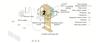 |
Fig. 3 "1+1+1" training mode |
2) "1+N+N" training mode
The system supports multi-person formation parachute training mode, referred to as "1+N+N" training mode (N>1), mainly for training space,software and hardware deployment in the case of wide field,in which the first "N" represents N parachute training simulators(individual soldier skill training unit), and the second "N" represents N heart-rate monitoring devices. A unit composed of N people can use this training mode to conduct full process and full-element parachute simulation training at the same time and in the same scene (see Fig.4).
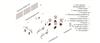 |
Fig. 4 "1+N+N" training mode |
3 Main Subsystem Design
The service supply layer in the overall structure design of the system is mainly includes eight service packages (see Fig.5), including Plan management, Perception and reappear, Assessment and evaluation,Virtual scene generation, HIL simulation, training management, network management, System management etc. These service packages designed with a service-oriented architecture can be flexibly assembled on demand, providing platform support for software such as training clients, training applications, real-time heart rate monitoring, flight scenario control and server-side control.
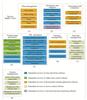 |
Fig.5 Main modules and services at the Service Supply Layer |
3.1 The Parachute Training Application Software
The parachute training application software is deployed on the server side to drive a number of training client software, uniformly initiate the parachute training process, support the design of training subjects, set dangerous special situations, input the new training assessment index system, support director, conditioning, evaluation and other functions. It uses three functional service packages of plan management, training management, as well as assessment and evaluation provided by the service supply layer, as shown in Fig. 5 (1), (3), and (6).
Plan management mainly includes functional modules such as scene setting, subject setting, emergency response setting, personnel grouping setting, and launching settings. It is responsible for completing various preparatory work before parachute training implementation. It differentiates trainees and supports setting training courses at different levels, configuring different parameters according to the training conditions of each course. For the four processes of pre-flight preparation, take-off, parachute operation, and landing, it supports differential setting of training parameters such as route, wind speed, wind direction, temperature, and weather conditions. In addition, different training categories and levels can be added for different trainees to reflect varying training difficulties. The training management service undertakes management functions such as training process control and guidance control. The assessment and evaluation service mainly encapsulates functional modules including assessment index management, evaluation model management, and assessment result data management. To overcome the distortion problem of traditional hierarchical analysis evaluation models [7-8], the system uses finite state machines to establish a training assessment rule base, achieving relatively objective, effective, and systematic comprehensive evaluation goals.
3.2 The Parachute Training Client Software
The training Client software to be embedded into the parachute simulator, serving as part of the parachute training application software. It supports simulating the entire process from aircraft exit to landing for parachutists, while also enabling simulation training for common emergency and special situation handling in solo parachute operations. The following functions are supported:
1) Motion process simulation function.
2) Hardware-in-the-loop simulation function.
3) Posture perception and virtual reappear function.
4) Helmet stereo scene generation and display function.
5) Training management and data recording function.
6) Training assessment and evaluation function.
The parachute training Client software, located in the integrated layer, serves as the core system for organizational parachute simulation training. It is responsible for driving the parachute simulator, VR headset, and motion capture equipment, as shown in Fig. 5 (2), (4)-(6). Its core lies in the design of kinematics simulation and position modeling for parachute-airborne movement, which enables the input and output of parachutist control data. Trainees can flexibly manipulate the parachute equipment based on battlefield conditions, promptly handle enemy threats, and respond to changes in wind direction, wind speed, and air currents.
The Perception and Reproduction, Hardware-in-the-loop Simulation Service Package integrates training functions such as human-parachute spatial displacement, weightlessness simulation, motion process simulation, and equipment operation simulation. The HIL simulation service simulates parachute deployment postures and trainees' movement postures including descent, lateral movement, and landing in the air by collecting trainees' control data. The Perception and Reproduction service package calculates the human-parachute aerial position and transmits the results to the body posture perception and virtual reproduction functional modules, displaying parachute status, movement direction, and speed in the virtual scenario[9-10].
The virtual scene generation service includes basic 3D environment simulation, complex weather condition simulation, landing site environment simulation, aircraft simulation, parachute simulation, and parachutist simulation. It supports VR headset and screen-based parachute aerial perspective simulation. This service utilizes multi-resolution modeling technology to enhance trainees' immersion through simulating personnel height perspective. It maximizes the simulation of scene changes from small to large, from blurry to clear, and relative distance from small to large when observed from air to ground. The training data recording and playback module in the training management service encapsulates data acquisition, storage, and reading functions.
3.3 The Heart-Rate Real-Time Monitoring Software
The heart-rate monitoring software can collect the real heart-rate of the trainees during training and display them synchronously on the computer screen of the integrated guidance console. It can support the access of several sets of supporting monitoring devices at the same time, automatically detect the heart-rate data on the internal network, actively find and display the heart-rate data reported by each monitoring device in real time, as shown in Fig.5 (2).
The wearable heart-rate detection device and the heart-rate real-time monitoring software need to be used together. They are connected through a gateway, both work in the local area network environment, and adopt a secure and reliable wireless transmission mode. The heart-rate real-time monitoring software can not only receive, display and process the data sent by the wearable heart-rate detection devices in real time, but also control its operation and working mode remotely.
3.4 The Flight Scene Control Software
The flight scene control software is deployed in the integrated guidance console and has two modes: online mode and independent mode. In the online working mode, the software is driven by the parachute training application software, which is consistent with the parachute training process. It is responsible for the whole process simulation, can continuously return instructions and 3D scene of helicopter (transport aircraft). At the same time, it responds in real time to the request for adjustment of speed and heading parameters in the course of flight. In the independent working mode, the operator sets the initial route of the helicopter (transport aircraft) and interferes with the whole flight launch process.
This software integrates the virtual scene generation and HIL simulation function package of the service supply layer, as shown in Fig.5 (4). It uses a third-party point of view for 3D display, with the observer on the ground. In order to improve the rendering speed, it bounds the parachute and the trainee's simulation, visually displays only the outline appearance, and places the focus of the 3D scene on the flying aircraft.
3.5 The Server Control Software
The server control software provides a set of simple, convinent and intuitive interfaces for system operators, as well as a number of background service programs, such as the communication protocol conversion module that provides intermediate services, so that softwares based on this module can be interconnected. It intergrates two function service packages: network management and system management, as shown in Fig.5 (7) and (8).
The console interface can real-time monitor the working status of each training client software, and the working status of hardware such as the parachute simulator and the heart-rate monitoring devices, and can carry out remote control and device management, so as to support the "1+N+N" architecture. Each client software and hardware are configured on demand, and automatically identify, respond actively and function adaptively after being connected to the system.
4 Workflow Design
4.1 Information Relationship
The information relationship mainly refers to the signal incentive sequence among the parachute simulator, the monitoring device of heart-rate, the parachute training application software, The heart-rate real-time monitoring software, the flight scene control software and the server control software as shown in Fig. 6.
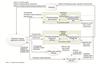 |
Fig. 6 The information flow chart |
4.2 Implementation Process
The content of simulation training can not only be the whole process of parachute training, but also focus on manipulation training in air. Organizing a training includes the following three steps: preparation before training, operation and evaluation after training.
1) Preparation phase
The parachute training application software reads the training scheme from the database and sends it to each training client software, heart-rate real-time monitoring software and flight scene control software. The server control software receives the working status and operation mode data transmitted by each training client software, heart-rate real-time monitoring software and flight scene control software then transmits them to the parachute training application software synchronously, so that it can perceive the number of training clients to dynamically adapt and respond actively.
2) Implementation phase
After the start of the training, the parachute training application software sends training plan and procedure control instructions to each training client software, heart-rate real-time monitoring software, flight scene control software and server control software. It can control the preset training process, and send the guiding plot to to adjust the current training content.
3) Assessment phase
After training, the parachute training application software automatically reads the data stored in the database, quantitatively evaluates the training effect according to the preset evaluation method, and gives the training results.
The system implementation process is shown as Fig.7.
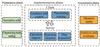 |
Fig. 7 System implementation process chart |
5 Conclusion
The system adopts a brand-new virtual military training platform, innovates structural design, creates a symbiotic deployment model of "1+1+1" and "1+N+N", and realizes the functions of mutual visualization, collision detection, virtual-reality synchronization, force feedback simulation and real-time heart-rate monitoring in multi-person virtual space. It can effectively support individual basic training and comprehensive application training, meet the training needs of trainees at different levels, shorten the training cycle, and reduce training consumption and security risks.
Next, the system will focus on the requirements of parachute training in complex environment, build the characterstic training scene model, optimize the organizational process, and improve the practicality.
References
- Zhou X G, Zhu P, Zhang Y Y, et al. Motion simulation of man-parachute system with six-degree-of-freedom[J]. Computer Simulation, 2022, 39(8): 26-32, 382(Ch). [Google Scholar]
- Li G, Wang J Y, Han L. Dynamics model of landing process for parachute simulator[M]//Theory, Methodology, Tools and Applications for Modeling and Simulation of Complex Systems. Singapore: Springer-Verlag, 2016: 493-502. [Google Scholar]
- Beijing Huaru Technology Co., Ltd. A sort of parachuting simulator be used for parachuting simulation training: 201911095451.7[P]. 2020-02-10(Ch). [Google Scholar]
- Zhou X G, Zhu P, Zhang Y Y, et al. Design and realization of 6-degree-of-freedom parachuting simulation training system[J]. Journal of System Simulation, 2022, 34(6): 1320-1329(Ch). [Google Scholar]
- Zhou X G, Zhu P, Zhang Y Y, et al. Research on inertia parameters of human-parachute system in pilot parachuting simulation training system[J]. Journal of Naval Aeronautical and Astronautical University, 2021, 36(1): 156-164(Ch). [Google Scholar]
- Han L, Gong X, Wang J Y, et al. Study on visual function of human computer interaction in parachuting simulator[J]. Journal of System Simulation, 2017, 29(8): 1747-1752(Ch). [Google Scholar]
- Ning L M. High-fidelity Flight Simulation of Parachute-payload System: The Multibody Dynamics Approach and Fluid-structure Interaction Approach[D]. Nanjing:Nanjing University of Aeronautics and Astronautic, 2018(Ch). [Google Scholar]
- Zhang B, Gong G H, Wang J Y, et al. Parachuting quality evaluation system for parachute simulator[J]. Journal of System Simulation, 2017, 29(S1): 82-90, 97(Ch). [Google Scholar]
- Zhou C, Peng Q P, Li Q M, et al. Numerical simulation and theoretical analysis of skydiving[J]. Journal of Guizhou Education University, 2018, 34(12): 17-20(Ch). [Google Scholar]
- Huangfu Q S, Yan F N, Gu Z. Analysis on the falling motion with KPK mechanics method[J]. Journal of University of Shanghai for Science and Technology, 2020, 426): 612-616(Ch [Google Scholar]
All Figures
|
Fig. 1 System architecture |
| In the text | |
|
Fig. 2 System composition |
| In the text | |
|
Fig. 3 "1+1+1" training mode |
| In the text | |
|
Fig. 4 "1+N+N" training mode |
| In the text | |
|
Fig.5 Main modules and services at the Service Supply Layer |
| In the text | |
|
Fig. 6 The information flow chart |
| In the text | |
|
Fig. 7 System implementation process chart |
| In the text | |
Current usage metrics show cumulative count of Article Views (full-text article views including HTML views, PDF and ePub downloads, according to the available data) and Abstracts Views on Vision4Press platform.
Data correspond to usage on the plateform after 2015. The current usage metrics is available 48-96 hours after online publication and is updated daily on week days.
Initial download of the metrics may take a while.