


| Issue |
Wuhan Univ. J. Nat. Sci.
Volume 31, Number 3, June 2026
|
|
|---|---|---|
| Page(s) | 269 - 280 | |
| DOI | https://doi.org/10.1051/wujns/2026313269 | |
| Published online | 24 June 2026 | |
Mathematics
CLC number: O159
The Structure and Properties of (ξ, s) - Generated Implications
-生成蕴涵的构造及其性质
1
School of Mathematics and Statistics, Hubei Minzu University, Enshi 445000, Hubei, China
(湖北民族大学 数学与统计学院,湖北 恩施 445000)
2
School of Mathematics and Statistics, Shaanxi Normal University, Xi'an 710119, Shaanxi, China
(陕西师范大学 数学与统计学院,陕西 西安 710119)
† Corresponding author. E-mail: This email address is being protected from spambots. You need JavaScript enabled to view it.
Received:
20
April
2025
Abstract
Fuzzy implication, as a critical logical connective, holds substantial research significance for its construction and characterization within the domain of fuzzy logic. In this paper, we first construct a novel class of fuzzy implications, termed  -generated implications, by employing a pair of multiplicative and additive generators derived from triangular conorms. Secondly, we investigate the fundamental properties of this new class of implications. Finally, we examine the relationships between the
  -generated implications and other established classes of fuzzy implications, including
  -,
-,  -,
-,  -,
-,  -,
-,  - and
- and  -implication. The results indicate that the
  -generated implications distinctly differ from these known types.
摘要
模糊蕴涵作为重要的逻辑连接词,对其构造和刻画都有着深刻的理论研究意义。本文首先通过三角余模的一对乘法和加法生成子,构造了一类新的模糊蕴涵,称为 -生成蕴涵。其次,研究了这类蕴涵的基本性质。最后,讨论了
 -生成蕴涵与其他类模糊蕴涵的关系,结果表明,
 -生成蕴涵不同于已知的
 -、
-、 -、
-、 -、
-、 -、
-、 -以及
-以及 -等蕴涵。
-等蕴涵。
Key words: fuzzy implication / triangular conorms / generators / (ξ, s)-generated implication
关键字 : 模糊蕴涵 / 三角余模 / 生成子 / (ξ,s)-生成蕴涵
Cite this article: ZHANG Jie, PAN Deng, ZHOU Hongjun. The Structure and Properties of (ξ, s)-Generated Implications[J]. Wuhan Univ J of Nat Sci, 2026, 31(3): 269-280.
Biography: ZHANG Jie, male, Master candidate, research direction: fuzzy implication, aggregation operators. E-mail: This email address is being protected from spambots. You need JavaScript enabled to view it.
Foundation item: Supported by the National Natural Science Foundation of China (12361094)
© Wuhan University 2026
 This is an Open Access article distributed under the terms of the Creative Commons Attribution License (https://creativecommons.org/licenses/by/4.0), which permits unrestricted use, distribution, and reproduction in any medium, provided the original work is properly cited.
0 Introduction
Fuzzy implication, as a generalization of Boolean implication in classical logic, serves as one of the fundamental connectives in fuzzy set theory and plays a significant role in approximate reasoning and fuzzy control systems[1-5]. Consequently, based on the practical applications of fuzzy implication, it is necessary to construct and characterize a new implication model. Over the past decade, generating novel fuzzy implications has been a central theoretical focus, exemplified by the proposal of various types such as novel  -threshold generated implications[6],
  -implications[7],
  -implications[8],
  -implications[9], and
  -implications[10]. According to the different construction methods, fuzzy implication generation approaches can be broadly categorized into three classes:
1) Implications generated via other essential fuzzy logical connectives, including fuzzy conjunctions,
disjunctions, and negations. These encompass  -,
-,  -,
-,  -,
-,  -, and
  -implications[11-18].
2) Implications generated by additive or multiplicative generators of  -norms or
  -conorms, along with their generalized variants. Examples include
  -,
-,  -,
-,  -,
-,  -, and
  -generated implications[19-25].
3) Ordinal sum implications constructed through diverse ordinal sum operations[26-34].
This paper focuses on methodologies for generating novel fuzzy implications via additive and multiplicative generators. To this end, we first review and analyze existing generator-based implication construction approaches to identify unresolved challenges. In Ref. [22], Yager introduced fuzzy implications generated by continuous additive generators of  -norms and
  -conorms, namely
  - and
- and  -generated implications, and highlighted their critical role in fuzzy approximate reasoning. Subsequently, Balasubramaniam[23] defined
  -generated implications via continuous multiplicative generators of
  -conorms. Building upon these foundations, Zhou[24] observed that three of the four continuous generators of
  -norms and
  -conorms had been used for implication generation, and consequently proposed in 2021 the final category of
  -generated implications—constructed from continuous multiplicative generators of
  -norms—providing a complete characterization based on the law of importation and the flexible ordering property. Later, in 2022, Zhou[25] further introduced
  -generated implications constructed via pairs of additive and multiplicative generators of
  -norms combined with standard real addition, along with characterizations of two specialized subclasses.
Our research motivation stems from three primary aspects: Firstly, despite the introduction of numerous fuzzy implications, a vast majority remain unexplored, and significant open problems persist in discovering new models satisfying specific algebraic properties or characterizing subclasses of fuzzy implications. Consequently, the search for and characterization of novel classes of fuzzy implications constitute an ongoing pursuit. Furthermore, from both theoretical and applied perspectives, establishing a sufficient repertoire of fuzzy implications presents compelling interest, which explains its enduring status as a research focus for decades. Secondly, building upon the foundation of  -generated implications and following a similar research trajectory, it is essential to elucidate whether a new class of fuzzy implications can be constructed using pairs of generators of
  -conorms, and what novel theoretical contributions such a construction might yield. Thirdly, through this work,
  -generated implications provide a fundamentally new model of fuzzy implications, serving as a fundamental building block in the framework of constructing fuzzy implications via generators of
  -norms and
  -conorms.
In this paper, a new concept of fuzzy implication is proposed by means of multiplicative and additive generators of  -conorms. Then, we study the basic properties of
  -generated implications. Finally, the relationship between
  -generated implications and other common fuzzy implications is analyzed.
1 Preliminaries
In this section, we recall here only some fundamental definitions and results which shall be used in the paper. We begin with the definition of  -norms and
  -conorms.
Definition 1[35] A  -norm is a binary function
  such that
  is commutative, associative, nondecreasing in both variables, and has 1 as its neutral element. Dually, a
  -conorm is a binary function
  such that
  is commutative, associative, non-decreasing in both variables, and has 0 as its neutral element.
Example 1[35] The following are basic dual pairs of  -norms and
  -conorms, where
  ,
,
(i) Minimum and Maximum pair:
(ii) Product and Probabilistic Sum pair:
(iii) Łukasiewicz pair: 
(iv) Drastic Product and Sum pair:  for
for 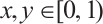 and otherwise
  ;
; 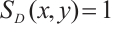 for
for 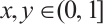 and otherwise
  .
.
Definition 2[1] A fuzzy implication is a binary function  satisfying the following conditions:
(I1)  is non-increasing in its first variable.
(I2)  is non-decreasing in its second variable.
(I3)  , and
, and  .
.
Definition 3[1] Let  be a fuzzy implication,
  a fuzzy negation and
  a
a  -norm. Then
  is said to satisfy
(i) the ordering property (OP), if 
(ii) the neutral property (NP), if 
(iii) the identity principle (IP), if 
(iv) the exchange principle (EP), if 
(v) the contraposition property with respect to 
(vi) the latter boundary condition (CB), if 
Definition 4[1] A fuzzy negation is a nonincreasing unary function  that satisfies
  and
and  . Moreover, a fuzzy negation
  is called
(i) strict if it is continuous and strictly decreasing on  .
.
(ii) strong if it is an involution, i.e.,  for all
  .
.
(iii) an  -normal CD-negation (continuous and strictly decreasing negation) if it is continuous on
  and is strictly decreasing on
  , where
  (see Ref. [24]).
For a fuzzy implication  , the function
  defined by
 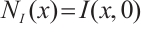 for all
  . Then
  is a fuzzy negation, called the natural negation of
  .
.
Definition 5[21] Let  and
and  be two closed subintervals of the extended real line
 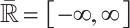 and let
  be a monotone function. Then the function
  , defined for each
 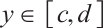 by
by

is called the pseudo-inverse of  . If
. If  is strictly monotone and the range of
  is denoted as Ran(
 ), then the restriction of
  to Ran(
 ), i.e., the function
  is also strictly monotone. Moreover, in this case we have the following identities:
(i)  .
.
(ii) 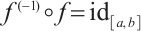 .
.
Definition 6[35] Let  and
and  be a continuous Archimedean
  -norm and
  -conorm, respectively.
(i) An additive generator (AG) of  is a strictly decreasing and continuous function
(ii) A multiplicative generator (MG) of  is a strictly increasing and continuous function
(iii) An additive generator of  is a strictly increasing and continuous function
(iv) A multiplicative generator of  is a strictly decreasing and continuous function
The relationships between additive and multiplicative generators of  -norms and
  -conorms are illustrated in Fig. 1.
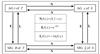 |
Fig. 1 The relationships between the additive and multiplicative generators of a  -norm T and its dual -norm T and its dual  -conorm S: a commutative diagram -conorm S: a commutative diagram
|
Definition 7[22, 24-25] (i) An  -generator is a strictly decreasing and continuous function
  For an
  -generator
  , the function
  given by

with the convention  , is a fuzzy implication, called
  -generated implication.
(ii) A  -generator is a strictly increasing and continuous function
 For a
For a  -generator
  , the function
  , given by

with the convention  and
and  , is a fuzzy implication, called
  -generated implication.
(iii) An  -generator is a strictly decreasing and continuous function
  with
with  . For an
  -generator
  , the function
  , given by

is a fuzzy implication, called  -generated implication.
(iv) A  -generator is a strictly increasing and continuous function
  with
with  . For a
  -generator
  , the function
  , given by

with the convention  and
and  , is a fuzzy implication, called
  -generated implication.
(v) Let  be a multiplicative generator of a
  -norm and
  an additive generator of another (possibly the same)
  -norm. Then, the pair
  will be called a
  -generator if
  . For a
  -generator
  , define a binary function
  by
by

then,  is a fuzzy implication, called fuzzy implication additively generated by
  and
and  , or simply called
  -generated implication.
Theorem 1[1] For a function  , the following statements are equivalent:
(i)  is an
is an  -implication with a continuous (strict, strong) fuzzy negation
  .
.
(ii)  satisfies (I1), (EP), and
  is a continuous (strict, strong) fuzzy negation.
2  -Generated Implications and Basic Properties
In this section, we introduce a new class of fuzzy implications by means of a pair of additive and multiplicative generators of  -conorms and then study their basic algebraic properties.
Definition 8 Let  be a multiplicative generator of a
  -conorm and
  an additive generator of another (possibly the same)
  -conorm. If the pair
  will be called a
  -generator if
  . For a
  -generator
  , define a binary function
  by
by

then,  is a fuzzy implication, called fuzzy implication additively generated by
  and
and  , or simply called
  -generated implication.
Proof For any 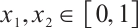 with
with  , since
  is strictly decreasing, its pseudo-inverse
  is also strictly decreasing. Additionally, as
  is strictly increasing, we have:

Consequently,

which implies that  satisfies (I1).
For any 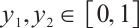 with
with  , the strict monotonicity of
  implies:

Thus,

proving that  satisfies (I2).
Next, we verify boundary conditions:

hence  satisfies (I3).
Remark 1 (i) To align Definition 8 with the preliminary conventions, we designate  as the
  -generator and
  as the
  -generator in the
  -generated implications. Notably, when
  or
or  is discontinuous, the
  -generated implication need not be discontinuous (see Example 2 (iii)). Even if
  and
and  are both continuous, there may exist discontinuous
  -generated implications (see Example 2 (iv)).
(ii) Our assumption  ensures
 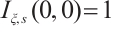 .
.
(iii) When  and
and  , there exists a particular
  -generated implication

(iv) By definition,  -generated implications are different in general from any of
  -,
-,  -,
-,  -, or
-, or  -generated implications. We will discuss their relations in the following section.
Example 2 (i) Let 
 and
and 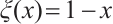 , which are the multiplicative generators of
  . The corresponding
  -generated implication is
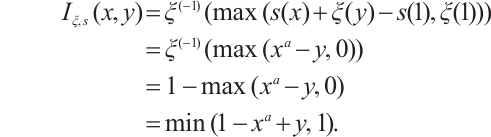
When  , this
  -generated implication reduces to the well-known Łukasiewicz implication
  . More generally, for continuous
  -generators satisfying
  and
and  , the implication
  corresponds to the
  -conjugate of
  , denoted
  ,
,

(ii) Let 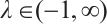 . Consider the additive and multiplicative generators of the continuous Sugeno-Weber t-conorm
  ,
,
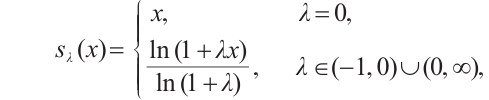
and

When  ,
,  . For
. For  Sugeno-Weber generated implication is
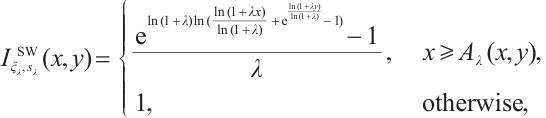
where  .
.
(iii) A discontinuous generator example. Let
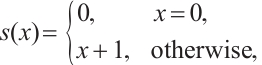
and 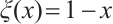 , the resulting
  -generated implication is
  which coincides with the Łukasiewicz implication
  . Notably,
  is continuous even though
  is discontinuous.
(iv) A discontinuous  -generated implication example: Let
  (the multiplicative generator of
  ) and
) and  (the additive generator of
  ). For all
 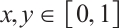 ,
,
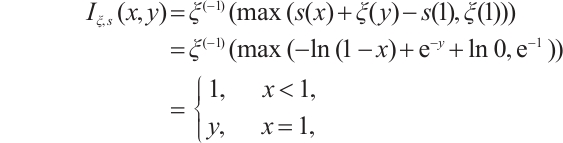
which corresponds to the Weber implication  . This
  -generated implication
  is discontinuous despite the continuity of
  and
and  .
.
Proposition 1 Let  ,
,  , and
, and  be any
  -generators. Then
(i) If  is continuous, then
  if and only if
  .
.
(ii) If  ,
,  ,
,  and
and  are all continuous, then
  if and only if
  and
and 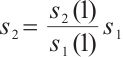 .
.
(iii) If  ,
,  and
and  are continuous with
 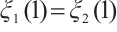 , then
  if and only if
  .
.
Proof (i) Assume  is continuous. The equality
  holds if and only if for all
 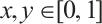 ,
,

if and only if

if and only if

if and only if for all  ,
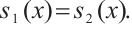
, 
(ii) Let  ,
,  ,
,  and
and  are all continuous. Then
 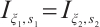 implies for all
  ,
,

which is equivalent to

Let 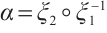 ,
, 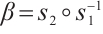 ,
,  ,
,  , then
  and
and  are two strictly increasing bijections satisfying
 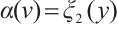 and
and  . The equation becomes

Since  , equation (2) reduces to
  . Letting
  , then we have

and consequently,
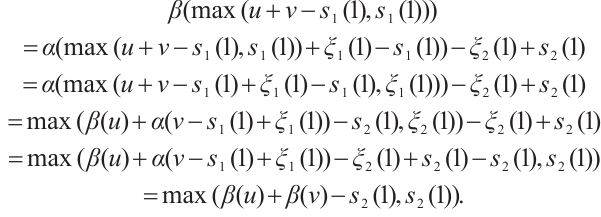
Let  for all
 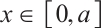 , then one obtains that

Comparing both sides, equality holds only if . Therefore,
In conclusion, 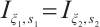 if and only if for any
(iii) It is immediately known from (ii).
Proposition 2 Let  be a
be a  -generated implication and
  its natural negation. Then:
(i) 
(ii) If 
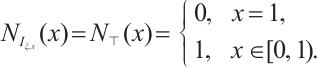
(iii) If  is continuous, then
  is continuous.
(iv)  is an a-normal CD-negation if and only if both
  and
and  are continuous.
(v)  is strict if and only if both
  and
and  are continuous and
  .
.
(vi)  is a strong fuzzy negation if and only if both
  and
and  are continuous and
  .
.
Proof (i) This follows directly from the definition of natural negation.
(ii) 
For  , since
  , we have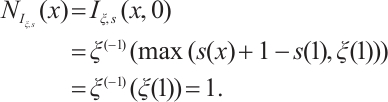
Thus, 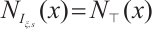 .
.
(iii) If  is continuous, then by (i), the
  the continuity of the
  the continuity of the decision, and
  is strictly decreasing function, therefore
  is continuous, so the
  is continuous.
(iv) For the sufficiency, let  , then
  . This means that
 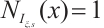 for
for 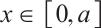 , and it is known from the strictness of
  that
that  is continuous and strictly decreasing on
  . Hence,
  is an a-normal CD-negation. Conversely, if
  is an a-normal CD-negation, by (iii),
  must be continuous. It remains to show the continuity of
  . Suppose to the contrary that
  is discontinuous at some point
  , then
  would take constant value on a subinterval
  , where
  ,
,  , contradicting the definition of a-normal CD-negation, thus,
  must be continuous.
(v) This is a special case of (iv) with  , which is equivalent to
  .
.
(vi) For the sufficiency, if  and
and  are continuous and
  , then
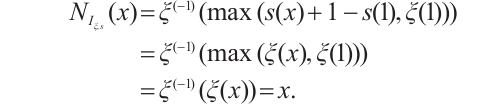
Thus, 
 , proving
  is a strong fuzzy negation. Conversely, since every strong negation is strict, it follows from (v) that
  is strong if and only if
  and
and  are continuous with
  . Thus
  if and only if

if and only if  , if and only if
  .
.
Remark 2 Regarding Proposition 2 (iii), the continuity of  is a sufficient condition for the continuity of
  , but the converse does not hold. Specifically, the continuity of
  does not imply the continuity of
  . A counterexample is provided in Example 2 (iii).
Proposition 3 Let  be a
be a  -generated implication and
  its natural negation. Then
(i)  satisfies (NP), (CB) and (EP).
(ii)  satisfies (CP) with respect to a fuzzy negation
  if and only if
  is a strong fuzzy negation.
(iii)  satisfies (IP) if and only if
  for all
  .
.
(iv)  if and only if
  for all
 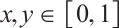 .
.
(v)  satisfies (OP) if and only if
  for all
  .
.
Proof (i) For any  ,
,

Hence,  satisfies (NP).
In a similar way, for any 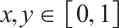 ,
,

If  , then

If  , then

Thus,  satisfies (CB).
Finally, for any 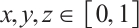 ,
,

Thus,  satisfies (EP).
(ii) By (i) and Corollary 1.5.9 in Ref. [1],  satisfies (CP) with respect to
  if and only if
  is a strong fuzzy negation.
(iii) For any  ,
,  if and only if
  if and only if
 if and only if
  .
.
(iv) For any 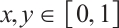 ,
, 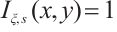 if and only if
  if and only if
 if and only if
  .
.
(v)  satisfies (OP), i.e.,
  . By (iv), this is equivalent to
  , if and only if
  . The last "if and only if" is proved as follows:
For the sufficiency, assume  . By the definition of
  , we have
  . Let
. Let  , since
  is strictly decreasing,
  . Thus,
  ,
,  satisfies (OP). Conversely, suppose
  satisfies (OP), i.e.,
  , we have
  . Let
. Let  , since
  is strictly decreasing,
  . Thus,
  for any
  . Setting
  ,
,  , we have
  . Hence,
  .
.
To conclude this subsection, the fundamental properties of commonly generated implications via generators are summarized in Table 1 for further analysis.
Basic properties of generator generated implications
3 Relations to Other Classes of Implications
In this section, we focus on the relationships between  -generated implications and
  -,
-,  -,
-,  -,
-,  -,
-,  -generated implications, as well as
  - and
- and  -implications. We begin by introducing the following notations:
●  , where
  denotes the subclass of
  -generated implications with
  and
and  the subclass of
  -generated implications with
  .
.
●  , where
 denotes the subclass of
  -generated implications with
  and
and  the subclass of
  -generated implications with
  .
.
● 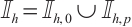 , where
  denotes the subclass of
  -generated implications with
  and
and  the subclass of
  -generated implications with
  .
.
● 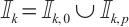 , where
  denotes the subclass of
  -generated implications with
  and
and  the subclass of
  -generated implications with
  .
.
●  , denotes the class of all
  -generated implications.
●  , denotes the class of all
  -generated implications.
●  , denotes the class of all
  -implications.
●  , denotes the class of all
  -implications of
  -norms.
Proposition 4 Let  be a
be a  -generated implication. Then
  is neither an
  -generated implication nor a
  -generated implication.
Proof By Proposition 3(iv), there exist numerous pairs 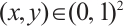 such that
 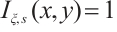 . However, for any
  -generated implication
  ,
, 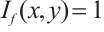 if and only if
  or
or  . This contradiction implies
  cannot be an
  -generated implication.
The natural negation of a  -generated implication is the Gödel negation. However, the natural negation of
  , denoted
  , differs fundamentally. Suppose
 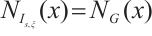 , we have
  for all
  . If
. If  is continuous, then
  for all
  , This contradicts the strict monotonicity of
  . If
. If  is discontinuous, then
  , the natural negation takes the form

Thus,  cannot be a
  -generated implication.
It immediately follows from the above proposition that 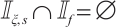 and
and  . Since
  -generated implications satisfying
  are precisely
  -generator implications, we have
 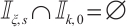 . Similarly, since
  -generator implications satisfying
  are precisely
  -generated implications, we have
 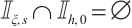 . We now consider the cases where
  and
and  .
.
Proposition 5 (i) 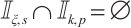 .
.
(ii) 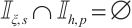 .
.
Proof (i) Assume, for contradiction, there exists a fuzzy implication  . Then, there exist
  -generators and a
  -generator with
  such that
  . For all
 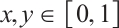 ,
,
 (3)
(3)
Additionally, the natural negations of  - and
- and  -generated implications must coincide. However, the natural negation of
  is
is

and when  ,
,

only when the  the equation is formed,at this point, the Proposition 2 (ii) shows that
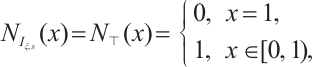
apparently  , so the assumption is not set up,
 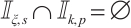 .
.
(ii) As shown in Ref. [24],  if and only if
  for all
  . It follows that
 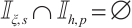 .
.
From Example 2 (i), we know that 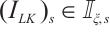 . Letting
  , it follows from Ref. [25] that
 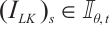 . Consequently,
  , and thus the following proposition naturally holds.
Proposition 6 (i) 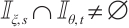 .
.
(ii) 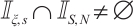 .
.
(iii) 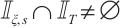 .
.
Proof (i) From Example 2 (i), let  and
and 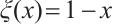 . The resulting
  -generated implication is
  . Similarly, as shown in Ref. [25], for
  and
and 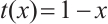 , the
, the  -generated implication is
  . Thus,
 , proving
  .
.
(ii) By Definition 8, Proposition 2 (iii), and Proposition 3 (i), it follows by Theorem 1 that  is a
is a  -implication with continuous fuzzy negation
  .
.
(iii) Suppose  is continuous. Through propositions 3 (i) and (v), it can be known that
  satisfies (EP) and (OP). Therefore, from Theorem 2.5.17 in Ref. [1], it is obtained that
  is an
is an  -implication. Namely
  is
is  -implication if and only if
  for all
  .
.
The following further reveal  with
with  ,
,  relationship.
Lemma 1[1] For a function  , the following statements are equivalent:
(i)  is an
is an  -implication with a continuous (strict, strong) fuzzy negation
  .
.
(ii)  satisfies (I1), (EP) and
  is a continuous (strict, strong) fuzzy negation.
Lemma 2[1] For a function  , the following statements are equivalent:
(i)  is continuous and satisfies both (EP) and (OP).
(ii)  is a conjugate of the Łukasiewicz implication
  , i.e., there exists an automorphism
  of [0,1] such that
  for all
 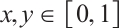 .
.
Proposition 7 Let  be a
be a  -generated implications such that
  and
and  are continuous on
  , then
  is an
is an  -implication with a continuous (strict, strong) fuzzy negation
  .
.
Proof It can be directly obtained from the above Lemma 1, Proposition 2 (iii) ((v), (vi)) and Proposition 3 (i).
Proposition 8 Let  be a
be a  -generated implication with
  continuous, then
  is an
is an  -implication if and only if
  for all
  .
.
Proof For the sufficiency, obviously, if  is continuous, then from Propositions 3 (i) and (v), it can be known that
  satisfies (EP) and (OP). Therefore, from Theorem 2.5.17 in Ref. [1], it is obtained that
  is an
is an  -implication. Conversely, if
  is an
is an  -implication, then it satisfies (OP), which can be directly obtained from Proposition 3 (v).
Remark 3 (i) From Lemma 2 and Example 2 (i), the  -generated implication
  in Proposition 8 is a conjugate class of the Łukasiewicz implication, i.e.,
 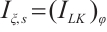 , where
  .
.
(ii) There exist  -implications that are not
  -generated implication. For instance,
  is an
is an  -implication whose natural negation is the Gödel negation. However,
  cannot be expressed as a
  -generated implication.
(iii) Let  be a
be a  -generated implication with continuous
  and
and  , and
, and  for all
  . Then
  is both an
  -implication with a continuous fuzzy negation
  and an
  -implication. However, there exist
  -generators such that
  is not a
  -generated implication. For example, let
  and
and 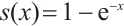 . The resulting implication is
  , which is not a
  -generated implication. By the relationship in Fig. 1,
  and
and  , we have

Comparing with  , equality holds only if
  and
and  . However, for
  ,
,  ,
,  . Thus,
  is not a
  -generated implication but belongs to both an
  -implication with a continuous fuzzy negation
  and an
  -implication.
(iv) There exist  -generated implications that are not
  -implications. For example, let
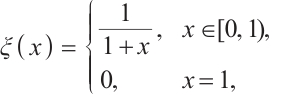
and , we have
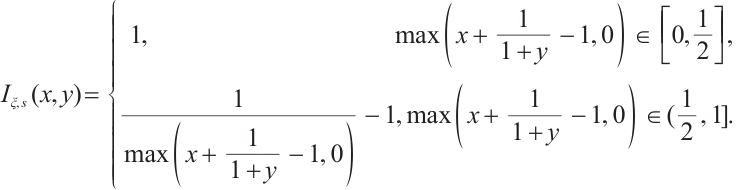
Its natural negation is
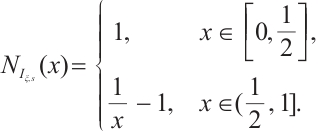
If  is an
is an  -implication, then
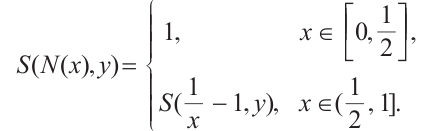
It can be known from  that when

there is

Let 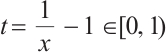 , then
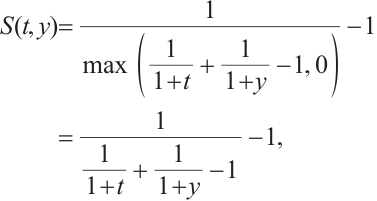
and the value range of  is
is  , which contradicts the fact that
  is a
is a  -conorms. Therefore,
  is not an
  -implication.
Finally, the intersections of  -generated implications with other classes of implications are briefly summarized via Table 2 and Fig. 2, where
  ,
,  , Remark 2 see Ref. [25],
  is the subfamily of conjugates of
  ,
,  is the subfamily given in Proposition 6,
  is the subfamily given in Remark 3 (iii), and
  is the subfamily given in Remark 3 (iv).
 |
Fig. 2 Diagrammatic summary of intersections |
Intersections between classes of fuzzy implications considered in this article
4 Conclusion
This paper proposes a class of  -generated implications constructed via multiplicative and additive generators of
  -conorms, and proves that such fuzzy implications constitute a novel family distinct from Yager's
  - and
- and  -generated implications, as well as
  - and
- and  -generated implications,
  -implications and
  -implications. Serving as a fundamental building block for constructing fuzzy implications through generators of t-norms and t-conorms,
  -generated implications not only enrich the structural framework of fuzzy implication families but also demonstrate applicability in approximate reasoning and fuzzy control systems, thereby providing theoretical foundations for decision-making models and related applied domains. Subsequent research will first investigate functional equations associated with
  -generated implications—including distributivity and exchange principles—and subsequently focus on the equivalent characterizations of general
  -generated implications.
References
- Baczyński M, Jayaram B. Fuzzy Implications[M]. Berlin: Springer-verlag, 2008. [Google Scholar]
- Cintula P, Hájek P, Noguera C. Handbook of Mathematical Fuzzy Logic[M]. London: College Publications, 2011. [Google Scholar]
- Król A. Dependencies between fuzzy conjunctions and implications[C]//Proceedings of the 7th Conference of the European Society for Fuzzy Logic and Technology. Paris: Atlantis Press, 2011: 230-237. [Google Scholar]
- Mas M, Monserrat M, Torrens J, et al. A survey on fuzzy implication functions[J]. IEEE Transactions on Fuzzy Systems, 2007, 15(6): 1107-1121. [Google Scholar]
- Kacprzyk J, Pedrycz W. Spring Handbook of Computational Intelligence[M]. Berlin: Springer-verlag, 2015. [Google Scholar]
- Zhang C, Qin F. A new method of generating fuzzy implications based on e-threshold[J]. Journal of Yunnan University (Natural Sciences Edition), 2024, 46(3): 411-421(Ch). [Google Scholar]
-
Yue J J. Properties of Generalized
 -Generated Implications and Their Applications[D].Chengdu: Sichuan Normal University, 2023(Ch).
[Google Scholar]
-Generated Implications and Their Applications[D].Chengdu: Sichuan Normal University, 2023(Ch).
[Google Scholar]
-
Liu E H, Zhao B.
 -implications and their properties[J]. Fuzzy Systems and Mathematics, 2019, 33(4): 11-20(Ch).
[Google Scholar]
-implications and their properties[J]. Fuzzy Systems and Mathematics, 2019, 33(4): 11-20(Ch).
[Google Scholar]
-
Ma Q, Zhou H J.
 -implications and its characterization[J]. Fuzzy Systems and Mathematics, 2017, 31(5): 1-12(Ch).
[Google Scholar]
-implications and its characterization[J]. Fuzzy Systems and Mathematics, 2017, 31(5): 1-12(Ch).
[Google Scholar]
-
Yu J H. Characterization of
 -Implications and
  -Implications[D]. Xi'an: Shaanxi Normal University, 2018(Ch).
[Google Scholar]
-Implications[D]. Xi'an: Shaanxi Normal University, 2018(Ch).
[Google Scholar]
-
Liu Z Q. New
 -implication generated by
  -partial order[J]. Computational and Applied Mathematics, 2024, 43(8): 425.
[Google Scholar]
-partial order[J]. Computational and Applied Mathematics, 2024, 43(8): 425.
[Google Scholar]
-
Dimuro G P, Bedregal B, Bustince H, et al.
 -operations and
  -implications functions constructed from tuples
  and the generation of fuzzy subsethood and entropy measures[J]. International Journal of Approximate Reasoning, 2017, 82: 170-192.
[Google Scholar]
and the generation of fuzzy subsethood and entropy measures[J]. International Journal of Approximate Reasoning, 2017, 82: 170-192.
[Google Scholar]
-
Dimuro G P, Bedregal B, Santiago R H N. On
 -implications derived from grouping functions[J]. Information Sciences, 2014, 279: 1-17.
[Google Scholar]
-implications derived from grouping functions[J]. Information Sciences, 2014, 279: 1-17.
[Google Scholar]
-
Wang Y H, Wang X X, Gao J X, et al. The properties of
 -coimplication and its characterization[J]. Journal of Neijiang Normal University, 2024, 39(10): 47-51, 57(Ch).
[Google Scholar]
-coimplication and its characterization[J]. Journal of Neijiang Normal University, 2024, 39(10): 47-51, 57(Ch).
[Google Scholar]
-
Ti L B, Zhou H J. On
 -coimplications derived from overlap functions and fuzzy negations[J]. Journal of Intelligent & Fuzzy Systems, 2018, 34(6): 3993-4007.
[Google Scholar]
-coimplications derived from overlap functions and fuzzy negations[J]. Journal of Intelligent & Fuzzy Systems, 2018, 34(6): 3993-4007.
[Google Scholar]
- Mangenakis P G, Papadopoulos B. Innovative methods of constructing strict and strong fuzzy negations, fuzzy implications and new classes of copulas[J]. Mathematics, 2024, 12(14): 2254. [Google Scholar]
-
Zhou H J, Liu X. Characterizations of
 -implications generated by 2-uninorms and fuzzy negations from the point of view of material implication[J]. Fuzzy Sets and Systems, 2020, 378: 79-102.
[Google Scholar]
-implications generated by 2-uninorms and fuzzy negations from the point of view of material implication[J]. Fuzzy Sets and Systems, 2020, 378: 79-102.
[Google Scholar]
-
Mas M, Monserrat M, Torrens J. A characterization of
 -,
-,  -,
-,  -and
-and  -implications derived from uninorms satisfying the law of importation[J]. Fuzzy Sets and Systems, 2010, 161(10): 1369-1387.
[Google Scholar]
-implications derived from uninorms satisfying the law of importation[J]. Fuzzy Sets and Systems, 2010, 161(10): 1369-1387.
[Google Scholar]
- Massanet S, Torrens J. On the characterization of Yager's implications[J]. Information Sciences, 2012, 201: 1-18. [Google Scholar]
-
Liu H W. A new class of fuzzy implications derived from generalized
 -generators[J]. Fuzzy Sets and Systems, 2013, 224: 63-92.
[Google Scholar]
-generators[J]. Fuzzy Sets and Systems, 2013, 224: 63-92.
[Google Scholar]
-
Xie A F, Liu H W. A generalization of Yager's
 -generated implications[J]. International Journal of Approximate Reasoning, 2013, 54(1): 35-46.
[Google Scholar]
-generated implications[J]. International Journal of Approximate Reasoning, 2013, 54(1): 35-46.
[Google Scholar]
- Yager R R. On some new classes of implication operators and their role in approximate reasoning[J]. Information Sciences, 2004, 167(1-4): 193-216. [Google Scholar]
-
Balasubramaniam J. Yager's new class of implications
 and some classical tautologies[J]. Information Sciences, 2007, 177(3): 930-946.
[Google Scholar]
and some classical tautologies[J]. Information Sciences, 2007, 177(3): 930-946.
[Google Scholar]
- Zhou H J. Characterizations of fuzzy implications generated by continuous multiplicative generators of T-norms[J]. IEEE Transactions on Fuzzy Systems, 2021, 29(10): 2988-3002. [Google Scholar]
- Zhou H J. Characterizations and applications of fuzzy implications generated by a pair of generators of T-norms and the usual addition of real numbers[J]. IEEE Transactions on Fuzzy Systems, 2022, 30(6): 1952-1966. [Google Scholar]
- Zhao Y F, Li K. New results on ordinal sum implications based on ordinal sum of overlap functions[J]. Fuzzy Sets and Systems, 2022, 441: 83-109. [Google Scholar]
- Drygaś P, Król A. Generating fuzzy implications by ordinal sums[J]. Tatra Mountains Mathematical Publications, 2016, 66(1): 39-50. [Google Scholar]
- Zhao B, Cheng Y F. Natural construction method of ordinal sum implication and its distributivity[J]. International Journal of Approximate Reasoning, 2022, 151: 360-388. [Google Scholar]
- Su Y, Xie A F, Liu H W. On ordinal sum implications[J]. Information Sciences, 2015, 293: 251-262. [Google Scholar]
- Zhou H J. Two general construction ways toward unified framework of ordinal sums of fuzzy implications[J]. IEEE Transactions on Fuzzy Systems, 2021, 29(4): 846-860. [Google Scholar]
- Cheng Y F, Zhao B, Lu J. On vertical ordinal sums of fuzzy implications[J]. Computational and Applied Mathematics, 2025, 44(4): 208. [Google Scholar]
- Geng J, Chen Z W, Wang R N. Ordinal sums of triangular norms on a bounded trellis[J]. Fuzzy Sets and Systems, 2025, 516: 109440. [Google Scholar]
- Lu J, Zhao B. Constructing ordinal sums of right and left semi-overlap functions on complete lattices[J]. Fuzzy Sets and Systems, 2025, 514: 109398. [Google Scholar]
- Mesiarová-Zemánková A. Non-commutative ordinal sum construction[J]. Fuzzy Sets and Systems, 2025, 507: 109308. [Google Scholar]
- Klement E P, Mesiar R, Pap E. Triangular Norms[M]. Dordreclot: Kluwer Academic Publisher, 2000. [Google Scholar]
All Tables
All Figures
|
Fig. 1 The relationships between the additive and multiplicative generators of a -norm T and its dual -conorm S: a commutative diagram
|
| In the text | |
|
Fig. 2 Diagrammatic summary of intersections |
| In the text | |
Current usage metrics show cumulative count of Article Views (full-text article views including HTML views, PDF and ePub downloads, according to the available data) and Abstracts Views on Vision4Press platform.
Data correspond to usage on the plateform after 2015. The current usage metrics is available 48-96 hours after online publication and is updated daily on week days.
Initial download of the metrics may take a while.